

Beyond the Deadline:
Bridging International Solidarities with Adivasi Resistance to Ongoing Developmental Violence
9 October 2026 With Speakers and Notes from Gadchiroli, Maharashtra, India
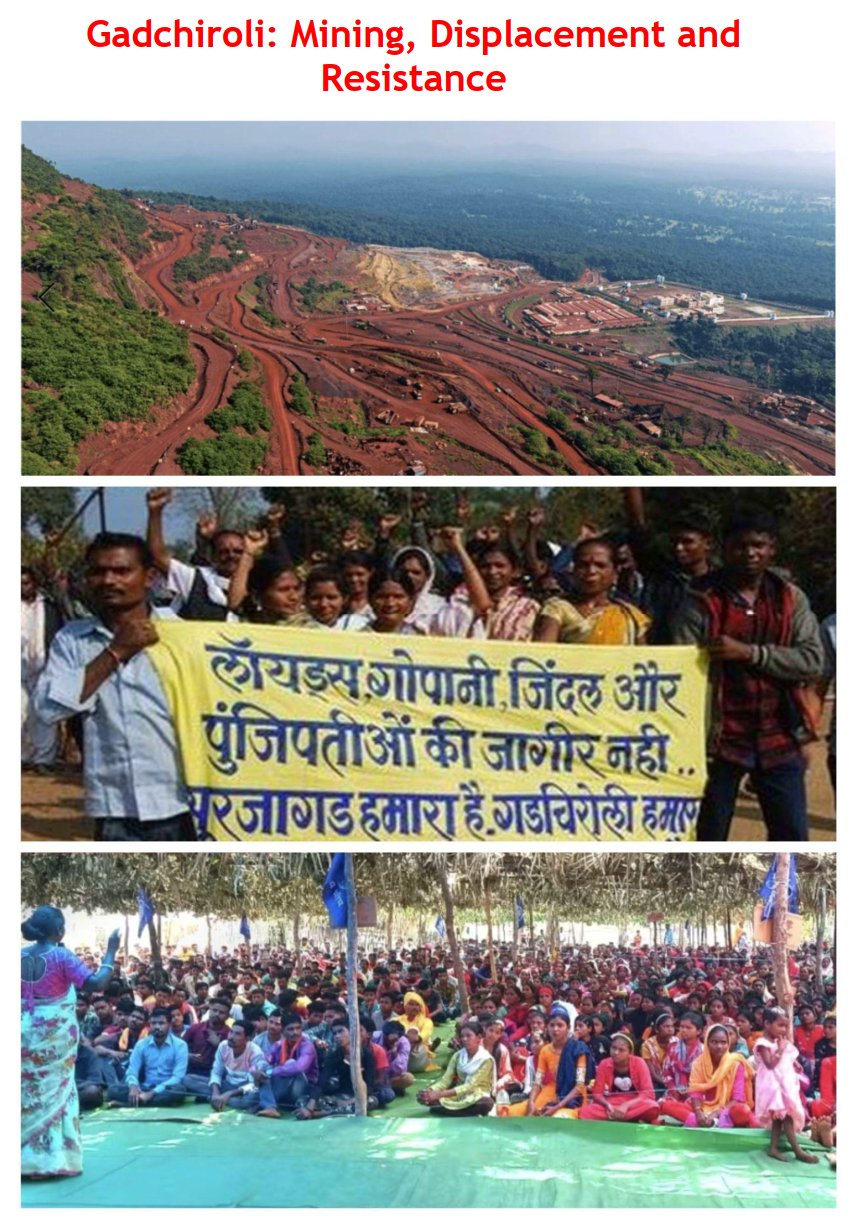
In this last session we heard from activists, lawyers, trade unionists from the Adivasi region of iron-rich Gadchiroli, Maharashtra about the situation there and how people are continuing to refuse their erasure by rampant deforestation and extraction projects by corporations such as Lloyd Metals. Understanding the situation in Gadchiroli will help us understand what might become the consequences from the state-corporate nexus, for Bastar and all Adivasi regions. Following this, we will have an open discussion on the possibilities of global solidarity building.
We also share our report of the situation in Gadchiroli. Just like Bastar, there is an urgent need to highlight the situation of Gadchiroli at national and international levels. Not only to raise voice on anti-mining and anti-displacement struggles, but also to create support mechanisms for release of all Adivasi and non-Adivasi prisoners for resisting developmental violence. Click on the link or image to access the report.
GLOSSARY (in order of appearance in the video):
• Akhil Bhartiya Adivasi Mahasabha – All India Indigenous Peoples Grand Assembly
• Jal Jangal Jameen – Water Forests Lands
• PESA – Provisions of the Panchayats (Extension to Scheduled Areas) Act 1996
• FRA – the Scheduled Tribes and Other Traditional Forest Dwellers (Recognition of Forest Rights) Act, 2006
• Gram Sabha – the Adivasi village assembly in which all adults in a village participate
• MIDC – Maharashtra Industrial Development Corporation
• Taluka (Tehsil): an administrative and revenue unit
• Bhumiya – keeper of land records
• Perma – priest
• Gram Panchayat: village-level elected local governance body serving as the most basic-level administration unit in rural parts of India
• Panchayat Samiti – the next or intermediate body that functions at the ‘block’ level and coordinates ‘development’ activities across several villages
• Triveni Sangam – point of confluence of the Indravati, Pearl Kota, and Pamul Gautami rivers
• 28 July – the start of the annual ‘Martyrs Week’ of the proscribed Communist Party of India (Maoist), which had a strong presence in the Gadchiroli region for about 4 decades
• Tehsildar – land revenue official who may also function as executive magistrate (Class 1 gazetted officer). A tehsildar manages the administration and tax collection at tehsil level. • Patwari – works under the Tehsildar, keeps the accounts, land records etc.
• CAMPA – Compensatory Afforestation Fund Management and Planning Authority
• Chironji (a nut), amla (a sour berry), mahua (a flower), tendu (a leaf) – these are the most commonly found Minor Forest Produce (MFP) in Adivasi areas, the collection and selling of these seeds, fruits, flowers and leaves forms a significant economic practice of the Adivasi people
• Ken Betwa Project – A proposed river linking project that has raised huge concerns for the local Adivasi peoples of the Ken Betwa region in Madhya Pradesh. To learn more about their struggle see: Forest Rights Act under pressure in Madhya Pradesh; Ken Betwa Protests
• Rani Kamlapati – a heroic Gond Adivasi queen – the Indian government has been steadily appropriating various Adivasi heroes to appease them while also oppressing and displacing them
• Janjatiya Gaurav Divas – ‘Tribal Pride Day’ announced by the current Government of India led by the Bharatiya Janata Party. The day chosen for this celebration is 15 November, the birthday of the Adivasi revolutionary leader Birsa Munda. As pointed out by the participants in the webinar, the Indian state is appropriating Adivasi symbols of pride, honour and inspiration while continuing to oppress the communities, along with their displacement and dispossession
• CRPF – one of the several Central Armed Police Forces that are directly controlled by the Ministry for Home Affairs of India. These ‘paramilitary’ police forces are supplied with state-of-the-arms weapon and surveillance systems for internal repression of dissenting communities such as the Adivasis.
Image: ECCHR